茶道
The Way of Tea
Chado — where every movement is a meditation and every bowl of tea an act of sincere presence.
Chado — where every movement is a meditation and every bowl of tea an act of sincere presence.
The Japanese tea ceremony, known as chado or chanoyu, is far more than the preparation and consumption of tea. It is a complete philosophical and spiritual practice that encompasses architecture, garden design, ceramics, calligraphy, flower arrangement, and cuisine.
Rooted in Zen Buddhist principles, chado was codified by the legendary tea master Sen no Rikyu in the 16th century into a discipline that embodies four principles: harmony (wa), respect (kei), purity (sei), and tranquility (jaku).
Each element of the ceremony — the rustic tea room, the carefully raked garden path, the hand-thrown ceramic bowl — is chosen to cultivate a state of mindful awareness in both host and guest.
Harmony with people and nature; recognizing that all things are interconnected and that beauty arises from their balanced relationship.
Sincere respect for others, for materials, and for the sacred nature of the ritual moment shared between host and guest.
Physical and spiritual cleanliness — purification of the space, the implements, and the mind before the ceremony begins.
The deep stillness that arises naturally when harmony, respect, and purity are truly achieved — the ultimate aim of the Way of Tea.
The host carefully cleans the tea room, arranges a simple seasonal flower (chabana) in the alcove (tokonoma), and hangs a calligraphy scroll. Guests gather in the waiting room (machiai).
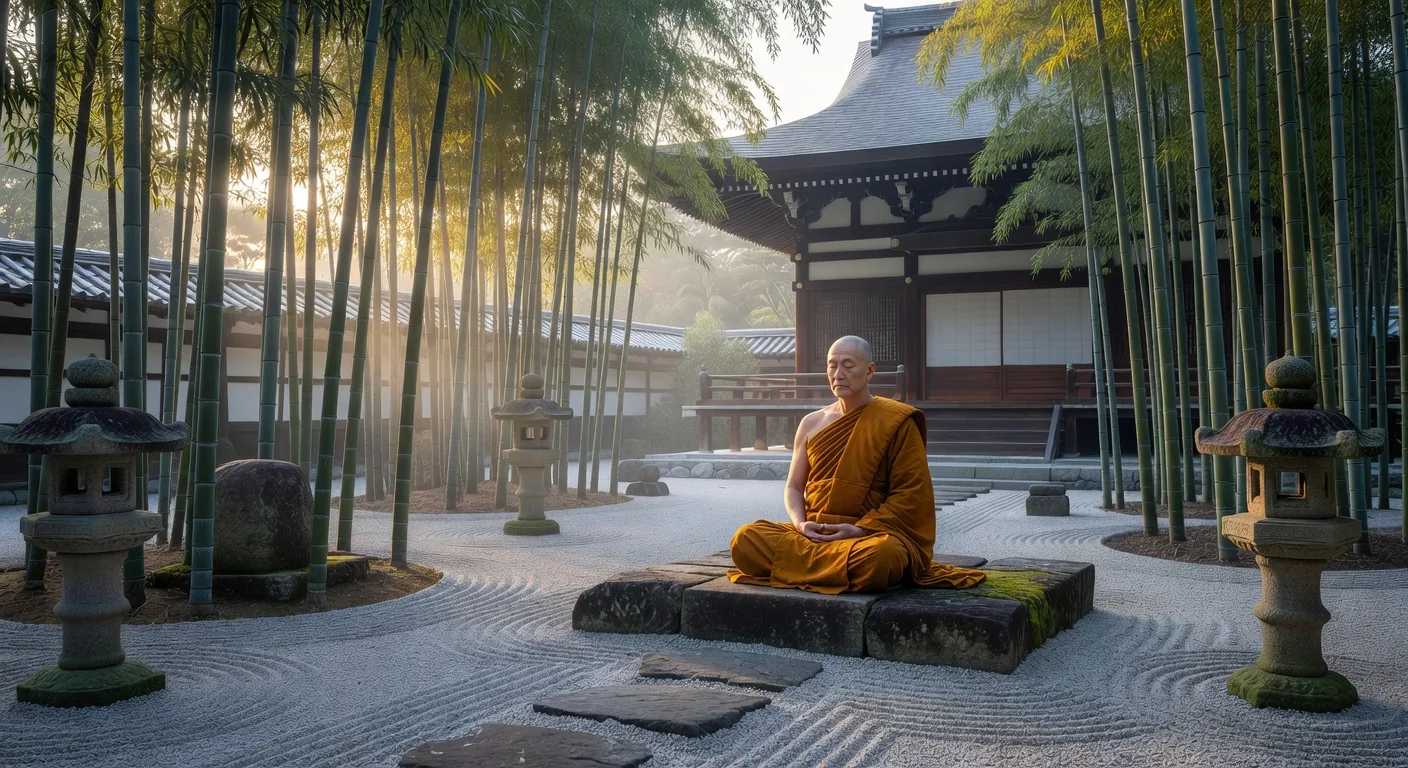
Guests are led through the dewy garden path, which serves as a transition from the mundane world to the sacred space of the tea ceremony. The path is designed to quiet the mind.
Guests enter through the small nijiriguchi (crawling entrance), which requires all to bow equally regardless of status. The room and its objects are silently appreciated.
In a full tea ceremony (chaji), a light multi-course meal called kaiseki is served first, followed by sake and confections. Simpler ceremonies (chakai) begin directly with sweets.
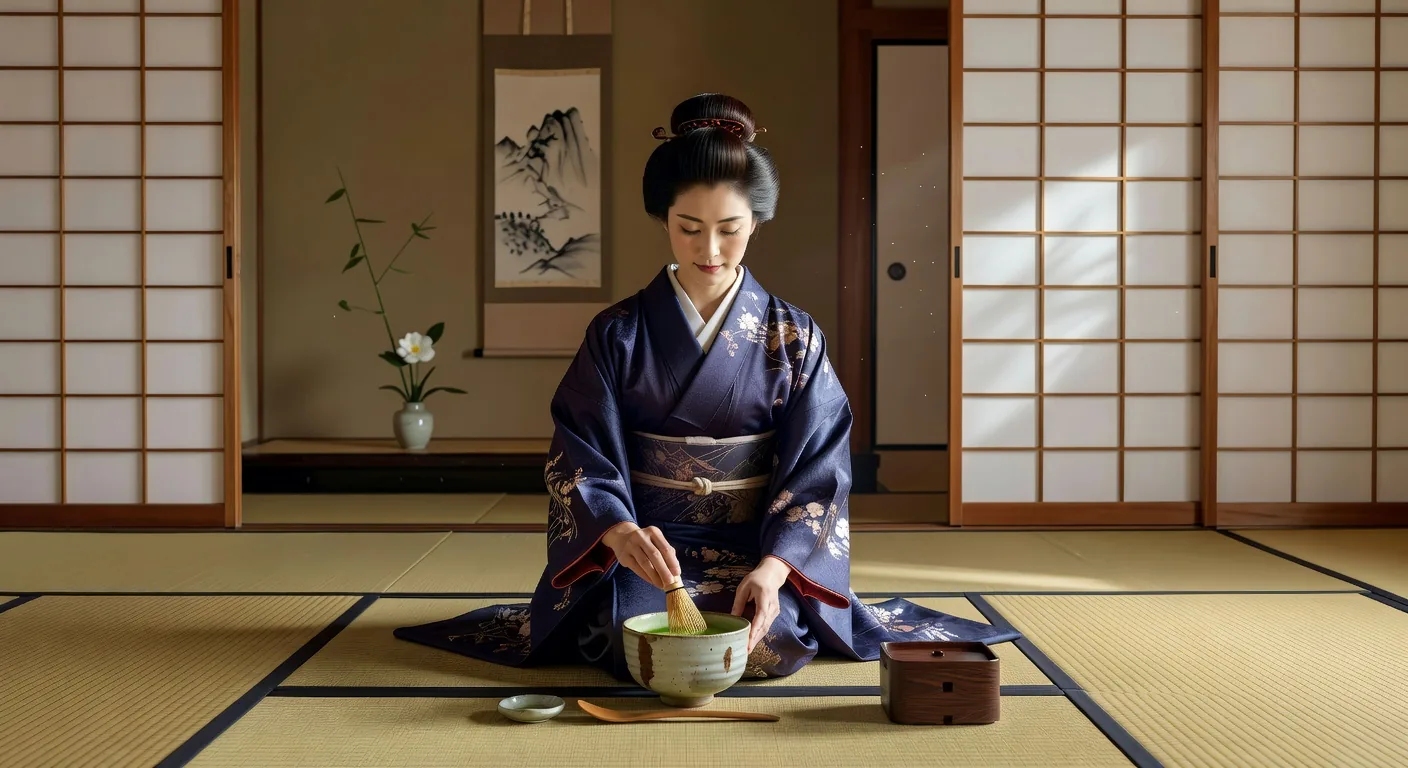
The host performs the ritual purification of the tea bowl (chawan), tea scoop (chashaku), and tea whisk (chasen) using a precisely choreographed sequence of movements.
Matcha is scooped with the tea scoop into the bowl, hot water is added, and the tea is whisked. In formal ceremonies, thick tea (koicha) is prepared first and shared among guests.
The guest bows before taking the bowl, rotates it clockwise before drinking to avoid placing lips on the "front," then wipes the rim and passes it to the next guest.
After the ceremony, guests may ask to view and appreciate the tea utensils. The host and guests engage in quiet, refined conversation about the implements and their provenance.
The most important utensil. Handcrafted ceramic bowls, often featuring intentional imperfections, that embody the wabi-sabi aesthetic at the heart of chado.
A delicate bamboo whisk carved from a single piece of bamboo, used to blend the powdered matcha with hot water into a smooth, frothy tea.
A slender bamboo scoop used to transfer matcha from its caddy to the bowl. Often hand-carved by the host and inscribed with a poetic name.
A small ceramic container used to store the thick matcha for the formal part of the ceremony. Often of great artistic and historical value.
A cast-iron kettle placed over an open hearth or charcoal brazier. The sound of water boiling in the kama is itself considered part of the ceremony.
A lacquerware container for thin matcha. Named for its resemblance to the jujube fruit, it comes in many lacquer finishes and seasonal designs.
"Each time you make tea, make it with the entirety of your heart — for this moment will never come again."— Sen no Rikyu, Tea Master (1522–1591)