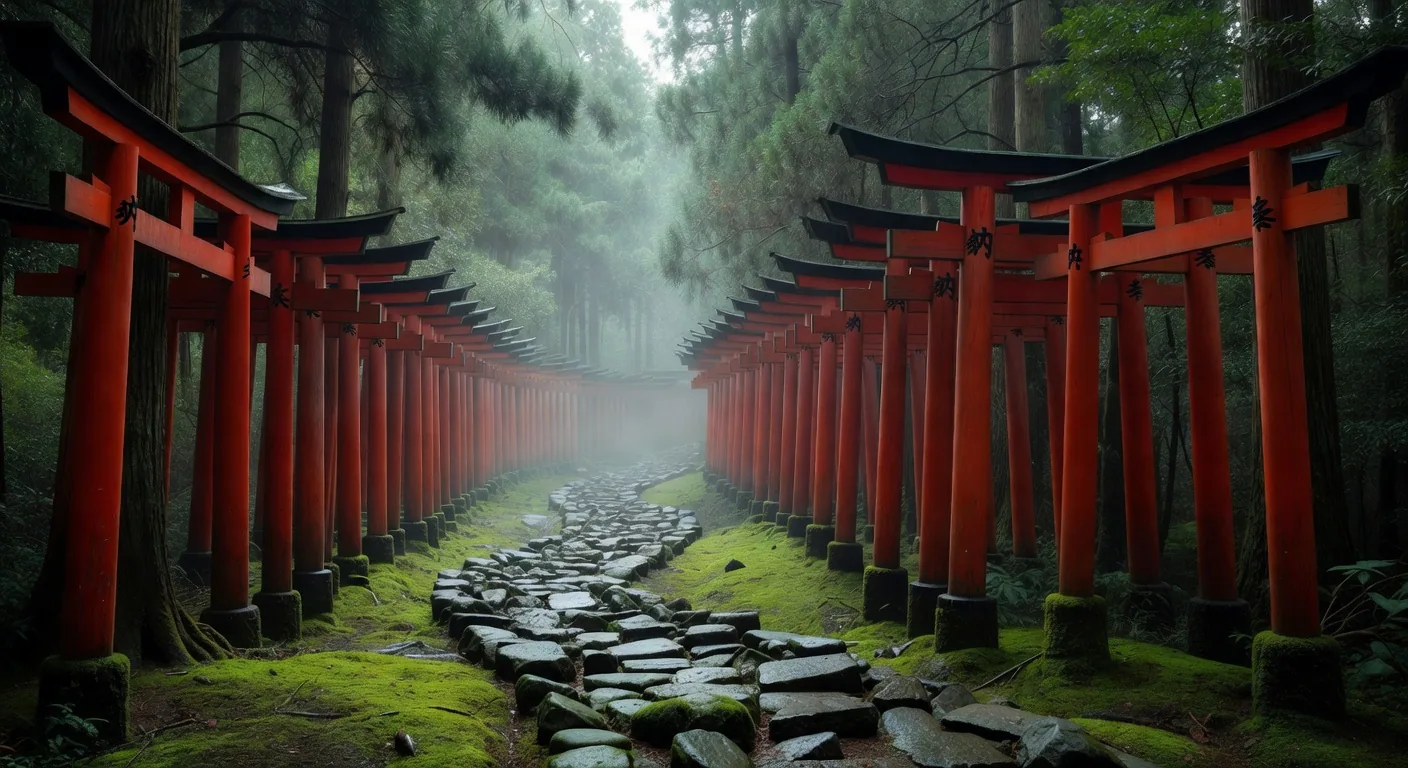
Shinto Shrine Red Torii
神仏

Shinto & Buddhism

The twin spiritual pillars of Japanese civilization — two traditions that have coexisted and intertwined for over a millennium.

Shinto — The Way of the Gods

Japan's indigenous spirituality, Shinto has no founder, no sacred scriptures, and no fixed doctrine. It is rooted in the animistic belief that kami (divine spirits) inhabit all things — mountains, rivers, trees, rocks, and the forces of nature.

Shinto practice centers on maintaining a harmonious relationship with kami through ritual purity, prayer, and offerings at shrines (jinja). The seasonal cycle of matsuri festivals is fundamentally Shinto in origin, marking the agricultural rhythms that governed life for millennia.

"Shinto does not seek to explain the world — it seeks to live within it, in a state of constant gratitude and awareness."

Buddhism — The Path of Awakening

Buddhism arrived in Japan from Korea in 552 CE and was swiftly adopted by the imperial court and aristocracy. Japanese Buddhism developed into many distinctive schools — Zen, Pure Land (Jodo), Shingon, Tendai, and others — each with different teachings and practices.

Buddhism brought to Japan an entire civilization package: sophisticated philosophy, art, architecture, writing, and medicine. Zen Buddhism in particular had a profound influence on Japanese aesthetics, martial arts, poetry, and the tea ceremony.

"Buddhist Japan understands that all things arise together, exist in interdependence, and pass away — and finds beauty in this truth rather than fear."
Living Practice

Religious Practice in Daily Japanese Life

⛩️

Hatsumode

The first shrine or temple visit of the New Year, made within the first three days of January. One of the most widely observed Shinto practices, with millions visiting famous shrines to pray for health, happiness, and success in the coming year.

🪬

Omamori — Sacred Charms

Protective talismans sold at shrines and temples for specific purposes: safe travel, health, academic success, business prosperity, or love. Carried throughout the year and then returned to the shrine to be ritually burned at year's end.

🙏

Obon — Ancestor Veneration

The mid-summer Buddhist festival during which the spirits of deceased ancestors return to visit their families. Families clean graves, light chochin lanterns to guide the spirits, and perform the traditional Bon Odori dance.

📿

Zazen Meditation

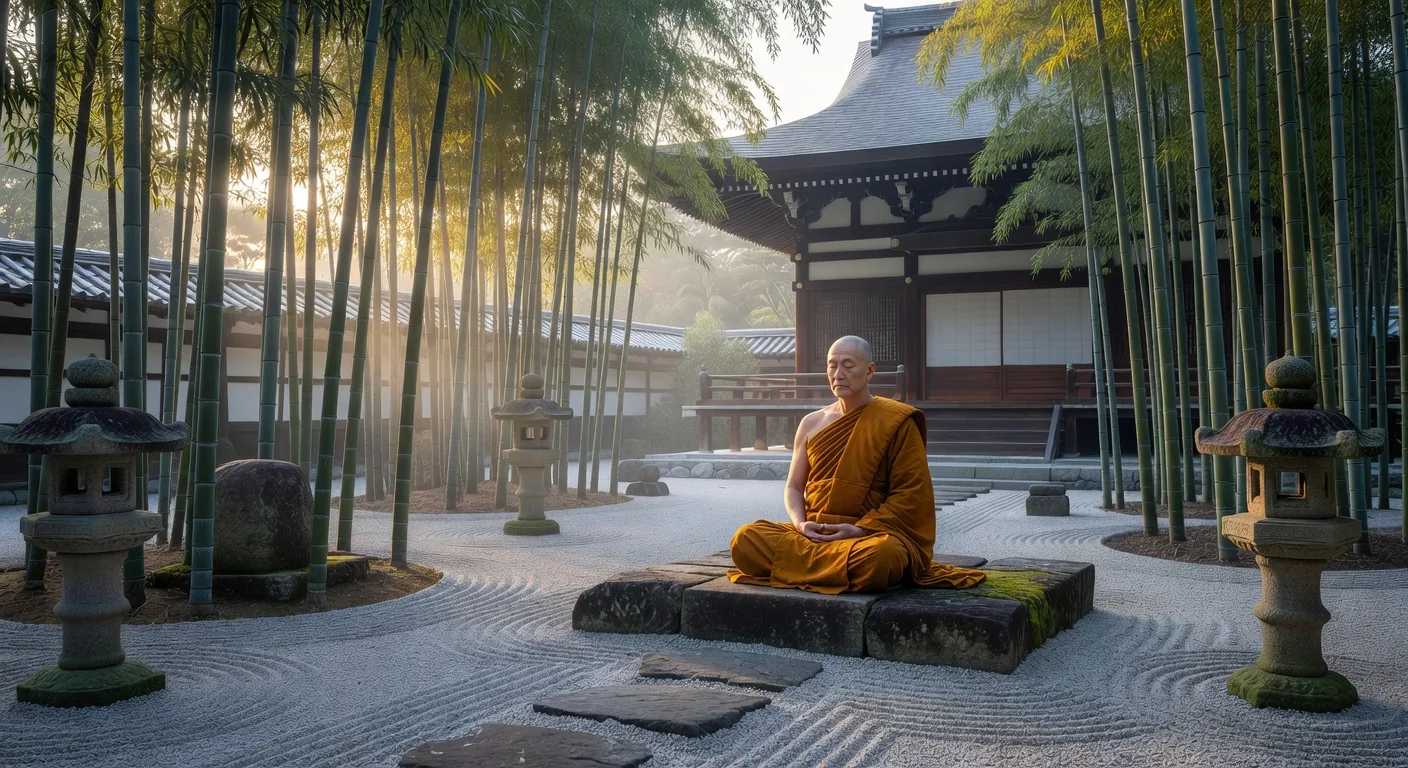
Sitting meditation practice central to Zen Buddhism. Zazen requires holding a specific posture, regulating breathing, and cultivating a state of alert, open awareness. Many Zen temples offer zazen practice sessions for visitors.

🔔

Joya no Kane

On New Year's Eve, temple bells throughout Japan are rung 108 times — once for each of the 108 defilements that cause human suffering in Buddhist teaching. The final stroke rings at midnight, beginning the new year in a state of purified simplicity.

💮

Setsubun Ritual

At major shrines and temples on February 3rd, celebrity priests and sumo wrestlers throw roasted soybeans (mamemaki) to crowds, driving away evil. "Demons out! Fortune in!" The ritual marks the traditional boundary between winter and spring.

Visitor Guide

How to Visit a Shinto Shrine

1

Torii Gate

Bow once before passing through the torii gate. Walk along the side of the approach path (sandō), not the center — which is reserved for the kami.

2

Temizuya

At the ritual purification basin, rinse both hands and your mouth. Left hand first, then right, then left again, then rinse the mouth and ladle handle.

3

Offering Box

Toss a coin into the offering box (saisen-bako). Any coin is appropriate. The clinking sound draws the kami's attention.

4

Bell & Bow

Ring the suzu bell if present. Bow twice deeply (90°), clap your hands twice, then bow once more. Hold your prayer during the final bow.

5

Departure

Step back from the shrine and bow once before turning to leave. Bow once more at the torii gate on your way out.

Zen Monk in Meditation

Shinbutsu Shugo — The Harmonious Coexistence

One of the most distinctive features of Japanese spirituality is the peaceful coexistence of Shinto and Buddhism for over 1,200 years. The vast majority of Japanese people participate in both traditions without contradiction — celebrating births and marriages at Shinto shrines, and holding funerals and ancestor veneration at Buddhist temples.

This pragmatic, non-exclusivist approach to religion reflects the Japanese concept of konton — a harmonious blending — and is one reason why Japan never experienced the sectarian religious conflicts that marked much of Western and Middle Eastern history.

"In Japan, you can be married by a Shinto priest, pray to Buddhist statues for health, and study Zen philosophy — all without any sense of contradiction."
"Japan's spirituality is not a doctrine to be believed — it is an atmosphere to be breathed, a relationship to be lived, a gratitude to be expressed in every season."
— Fresh Flower Corner